Toxic Halloween Treats
What your dog must never eat
Halloween is more fun when pets join in but human candy is not a treat for dogs. Some sweets can turn into an emergency. Keep candy bowls up high, close doors to trick-or-treat piles, and use dog-safe snacks instead.
Chocolate
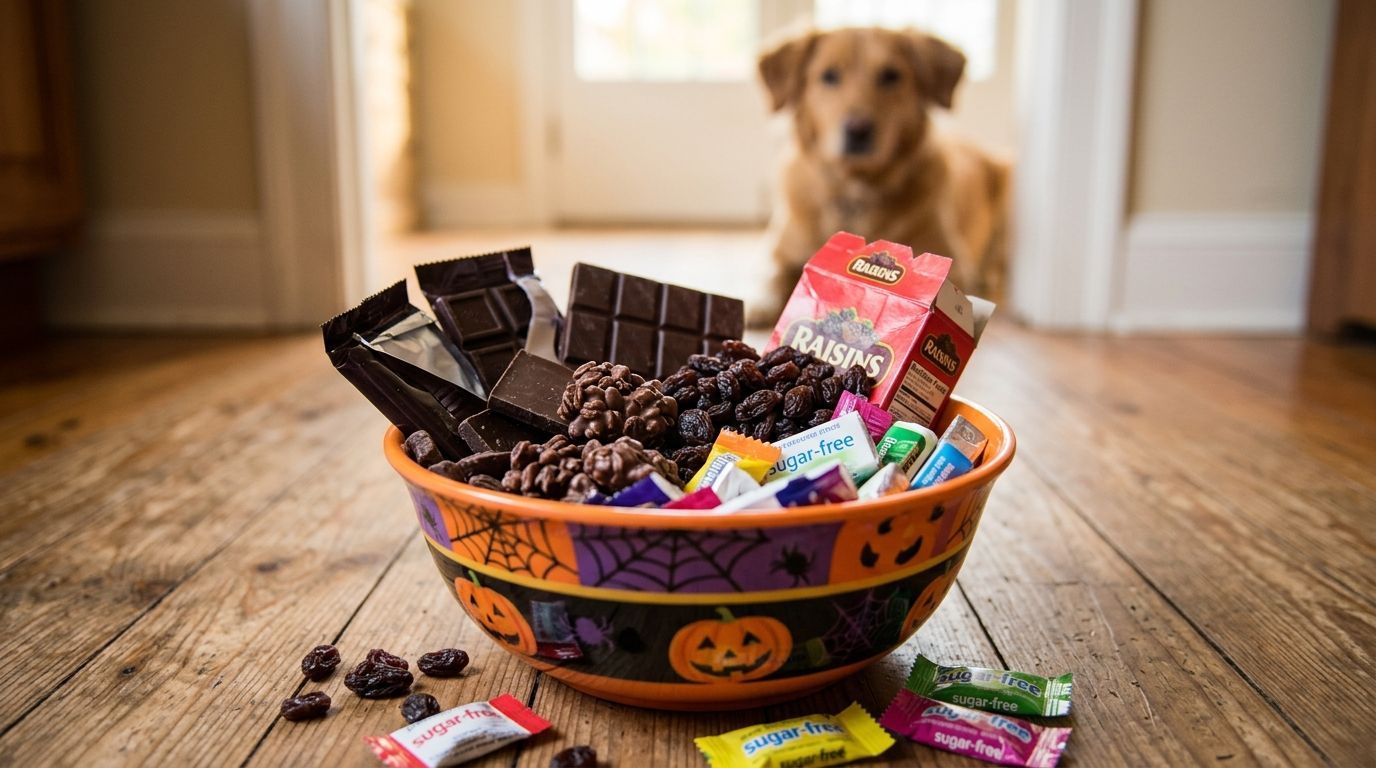
The biggest Halloween risk. Chocolate contains theobromine (similar to caffeine). Dark and baking chocolate are the most dangerous. Milk chocolate is less concentrated but still unsafe. White chocolate has little theobromine but should not be fed. Risk depends on the dog's size, the type, and how much was eaten.
Watch for: vomiting, restlessness, trembling, seizures, fast or irregular heartbeat, overheating, collapse. Call your vet right away especially for dark chocolate, small dogs, puppies, seniors, or dogs with other health issues.
Chocolate-covered raisins
Two problems in one candy. Grapes and raisins can cause kidney failure in some dogs — and there is no reliable way to know which dogs or how many pieces it takes. Treat any raisin or grape ingestion as urgent and call the vet.
Sugar-free candy, gum, and mints
Xylitol is safe for people and can be life-threatening for dogs. It can drop blood sugar quickly and damage the liver. Found in many sugar-free gums, mints, baked goods, and some candies. Signs: lethargy, vomiting, seizures, collapse. This is an emergency — call the vet immediately.
Hard candy and lollipops
Choking hazard if swallowed whole. Pieces can break into sharp fragments. Lollipop sticks can lodge in the throat or intestines. Hard candy can also crack teeth.
Wrapped candy
Dogs do not unwrap treats. Paper, plastic, and foil can bunch up and block the intestines. That can mean vomiting, no stool, and in severe cases a perforation. Any dog that ate a pile of wrapped candy needs a vet check.
High-fat candy (nuts, caramel, peanut-butter cups)
Rich, oily candy can trigger pancreatitis. Signs may not show for a day or two: belly pain, vomiting, diarrhea, poor appetite. Large amounts can also bloat the stomach. Bloat that progresses to a twisted stomach (GDV) is a life-threatening emergency.
Safer ways to include your dog
Use dog-safe biscuits, chews, or a stuffed toy with dog-safe peanut butter (no xylitol) or plain yogurt. Skip the candy bowl. If you think your dog ate something on this list, call your veterinarian or an emergency clinic don't wait for worse symptoms.
ASPCA Animal Poison Control: 888-426-4435 (fee may apply)
Source & credit
Safety points adapted from "Toxic Halloween Treats: What Your Dog Must Never Eat," written by Petco's Animal Care, Education and Compliance Team (updated June 18, 2026), including comments from Dr. Kelly Ryan (Humane Society of Missouri) and Dr. Jeff Werber (Century Veterinary Group). This handout is an Animal Bed & Breakfast original summary for client education and is not a reprint of Petco's article. It is not a substitute for veterinary care.
Phone:
704-784-5422
Email:
animalbedandbreakfast@gmail.com
Website:
animalbedandbreakfast.com